Why Is Water Pooling Under My Outdoor Heat Pump in Bandon?
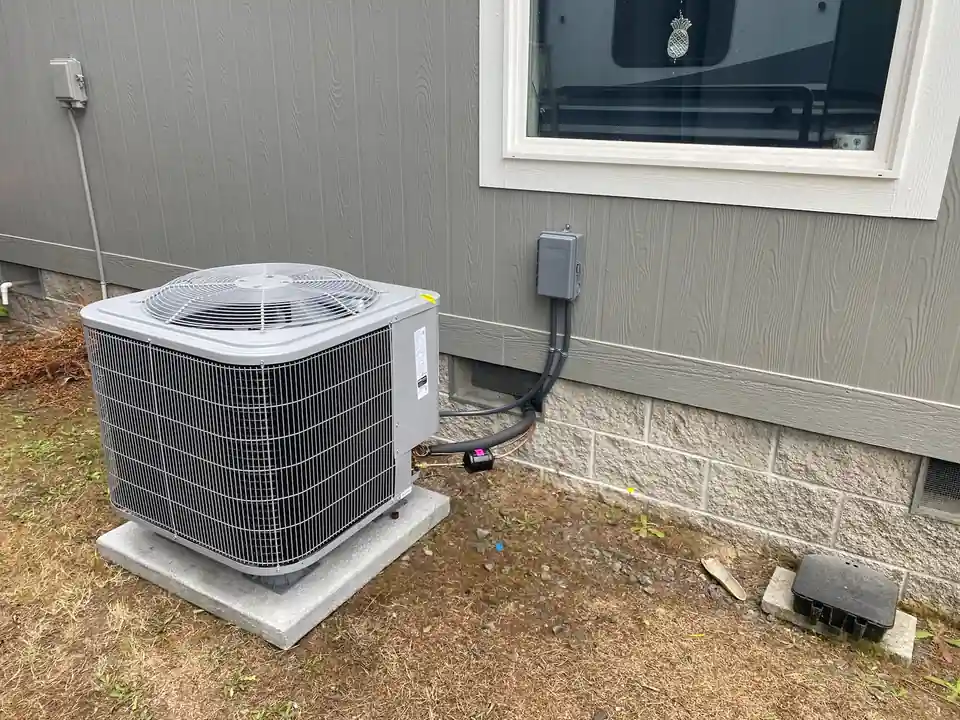
During Bandon’s damp fall weather, many homeowners start heating their homes for the first time since spring. While seeing water pooling under an outdoor heat pump can feel like a concerning symptom, it isn’t always a problem. Often, water will pool under an outdoor heat pump during its normal heating and defrost operations. However, rain can make it harder to determine the source of the water.
The best way to determine if the released water is a cause for concern is by noting where it is located and if your heat pump is still operating effectively.
Why a Working Heat Pump Can Leave Water Outside
If there is water pooling under your outdoor heat pump, there are a few common causes that may be responsible. You may see water around a well-maintained heat pump if there is moisture collecting on the outdoor coil that is melted off during the unit’s defrost cycle.
Moisture Can Collect on the Outdoor Coil During Heating
If you see moisture on the outdoor coil, it does not mean that there is a refrigerant leak. The outdoor coil absorbs heat from the outside air, which the refrigerant carries indoors to warm your home. During this process, the coil can become cold and start to collect moisture.
Defrost Can Release Water as Frost Melts
Sometimes, the moisture on the coil becomes cold enough to freeze. Defrost mode is used to clear frost from the outdoor coil. You may note a small amount of water discharged or steam during a defrost cycle.
Even if the air temperature isn’t cold enough for water to freeze, defrost mode may still be necessary. The outdoor coil is often colder than the air temperature, so frost can build up when the air temperature is above freezing.
Is the Water From the Heat Pump or From Rain Runoff?
To narrow down whether you’re dealing with a heat pump’s defrost water or rain runoff, there are a few practical questions you should ask yourself. For your safety, you should make these observations from a dry, safe location after severe weather has passed.
- Does the water appear during a heating cycle on dry days?
- Do you only see a puddle spread across the whole pad during rainfall?
- Is the water draining away, remaining against the unit, or staying against the foundation?
- Does the water appear to be coming from a separate drain outlet, a downspout, sloping ground, or underneath the unit?
- Is your home maintaining its set temperature?
- Are there any fault messages present?
While these questions will not determine what the underlying issue is, they help technicians narrow down whether there is an equipment drainage or site-water problem.
When a Puddle Deserves Attention
Is water under a heat pump normal? While puddles under a heat pump after rain can be normal, persistent pooling or flooding can indicate a drainage problem. Water accumulation accompanied by unusual noises, persistent ice buildup, or reduced heating performance may also indicate common heat pump problems on the Oregon Coast. In the following situations, contact our experienced HVAC technicians for repairs.
- Persistent Pooling Around the Base: While pooling during and after rainfall might not be an issue, persistent pooling is a potential concern. Even if your heat pump is functioning normally, you should have the heat pump installation and its drainage assessed.
- Water Flowing Toward the Foundation or Across the Walkway: In this situation, the main concern isn’t necessarily about your heating, ventilation, and air conditioning (HVAC) equipment. Instead, the greater worry is that the route the water takes can become a slip hazard. If it goes toward the foundation of your home, it can eventually cause damage.
- Ice Buildup That Persists: If you have ice buildup on the unit that persists after defrost mode, you should arrange for a professional HVAC assessment. This is especially true if your system is struggling to heat your home appropriately.
- Changed Operation, Recurring Fault Codes, or Poor Heating Performance: If your heat pump is blowing cold air, displaying recurring fault codes, or struggling to maintain your home’s temperature alongside water accumulation, record these symptoms. Then, call your local HVAC company to schedule an appointment.
- Floodwater Reaching the Equipment or Electrical Components: When water is in contact with electrical components, it can pose an immediate fire and electrocution risk. Long-term, it can lead to short circuits, corrosion, and control board issues. For your safety, stay away from the water and affected components. Then, call our team for a safety assessment before you restart the unit.
What Can a Homeowner Safely Check?
If your heat pump is dripping water outside in heating mode or a puddle is accumulating, there are a few things you can do to detect the problem and troubleshoot.
- Observe Visible Issues: You can take photos of the unit, the puddle, and nearby runoff sources to document the issue. Additionally, note the weather and operating mode.
- Clear Debris: Once the conditions are safe enough to do so, you can clear away loose debris that is on the ground.
- Stay Safe: For your safety, you should never reach into the cabinet or beneath moving equipment. You should also not remove panels, tip the unit, chip away ice, or poke anything into drain openings. Unless advised to by a professional, do not install any drain tubing.
- Never Cover the Unit: Heat pumps require airflow, so never place a cover over a unit that is currently operating.
Sometimes, changes have to be made to help water drain. Leave gutter adjustments, site alterations, and other equipment drainage updates to the professionals.
What Will a Technician Check if the Water Keeps Collecting?
When you call us to have the heat pump and drainage checked, we will quickly work to evaluate where the water is originating and whether it can drain away from the base properly. We will assess the runoff, equipment clearance, and the heating system performance. If a gutter or landscape drainage issue is present, you may need to have a different contractor come in to make the change.
Once you have addressed the water accumulation, the next step is to prepare your heat pump for fall heating. Our team can schedule a maintenance tune-up to clean the components, test the system’s performance, and inspect moving parts for wear. With the right care, you can reduce the likelihood of future breakdowns, improve your energy efficiency, and optimize your heat pump’s overall performance.
Quick Answers About Water Under a Heat Pump
Bandon homeowners often ask a few common questions about heat pumps and water accumulation.
Can Water Appear When It Has Not Rained?
Yes, water can appear in dry weather conditions. During normal heating operations, the heat pump can accumulate moisture on the outdoor coil. If this moisture freezes, the unit’s defrost mode can melt the frost or ice. Because of this, it’s important to assess the drainage path and water source instead of just assuming the cause.
Should I Turn the Heat Pump Off Because There Is a Puddle?
Not necessarily. A small, freely draining puddle may result from moisture melting during a normal defrost cycle, which generally does not necessitate a shutdown. In comparison, flooding, water near electrical parts, and abnormal operations can be potentially dangerous. Do not turn on the unit in any of these circumstances. If the unit is currently on, do not reach into standing water to reach the disconnect switch. Instead, call our team for professional support.
Find Solutions to Your Heat Pump Issues
If you have water pooling under your outdoor heat pump, we can help. With our upfront pricing, same-day service, and professional diagnostics, we can quickly determine the cause of the problem and walk you through your repair options.
Book your next heating repair today by calling us at 541-238-2973.
Service Request
"*" indicates required fields