Author: Devonnie Asher

Air Handler Troubleshooting: Fan, Control Board, and Airflow Issues

When your home’s temperature doesn’t feel as comfortable as it used to and you can’t seem to find the culprit, it may be time to do some basic air handler control board troubleshooting. Inside your heating, ventilation, and air conditioning (HVAC) system, you’ll find your air handler unit.

Usually, when you notice a lack of airflow, warmer-than-usual air, or the fan in your system running nonstop, there may be components that aren’t working properly. Especially if your system has also stopped responding to temperature changes.

Here at Alpha Heating & Air, we’re experts at fixing air handler issues. Reach out to us at 541-216-4539. However, if you’d like to know what kind of troubleshooting we do, keep reading.

What Does an Air Handler Do?

The air handler is the indoor half of your HVAC system, responsible for distributing air throughout your home via your ductwork.

How the Fan, Control Board, and Airflow Work Together

In an ideal situation, the air handler, the blower motor, the evaporator coil, and the control board work together.

When you adjust the temperature on your thermostat,, the control board receives the signal and triggers the blower motor to start. Then the fan pushes conditioned air through your ductwork into your home.

It’s an intricate process, which is why even a small issue with just one component can drastically affect how your HVAC system performs.

Common Air Handler Problems

Fan and Blower Motor Issues

If your blower motor or air handler fan starts developing a problem, you’ll probably first notice weak airflow. Also, you might realize that the air handler fan runs constantly, despite your heating and cooling being off.

Unfortunately, this type of problem is more common along the coast because humidity and salt air can accelerate the corrosion of electrical components and wear on motor bearings. To fix the problem, our team evaluates your component performance. From there, we can replace a capacitor or a failed motor as needed.

Control Board Problems

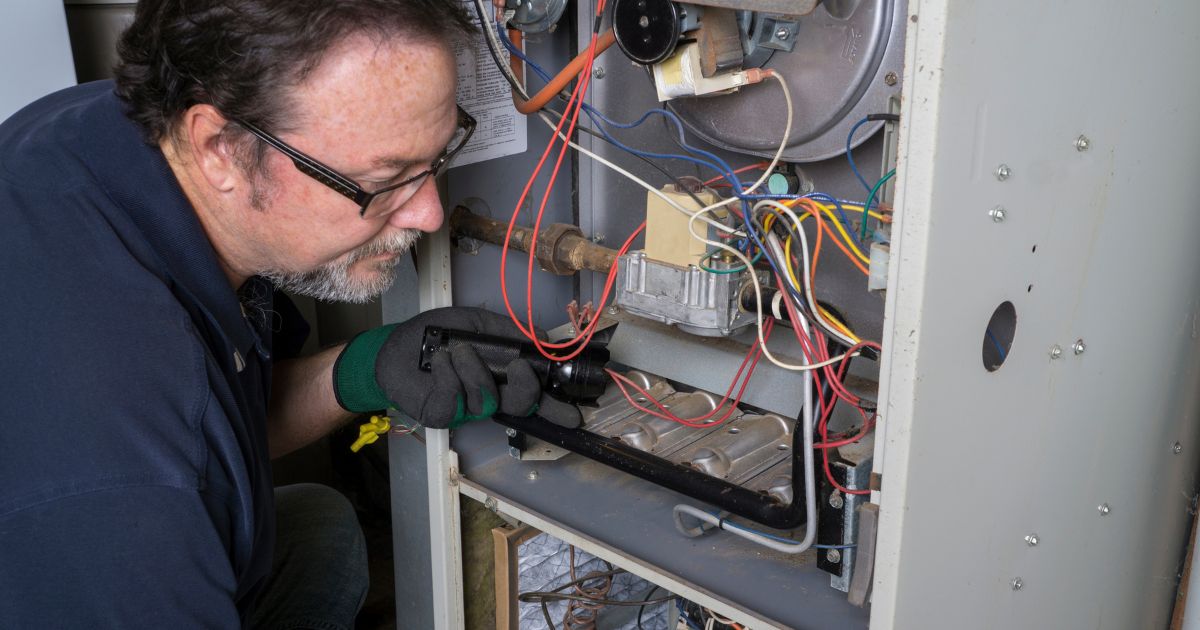
Your control board is like the brain of the air handler. When it malfunctions, components may short-cycle, fail to start, or operate intermittently. The unit may not respond when you want to change the temperature in your home.

This especially becomes a problem because older Bandon homes are more likely to have issues with moisture intrusion and corrosion on board connectors because of the quality of the coastal air. Most mechanical spaces aren’t conditioned.

When we do air handler troubleshooting, we diagnose and replace the control board. Afterwards, routine maintenance will help us get ahead of any problem that may develop.

Weak or Uneven Airflow

Weak airflow is often connected to clogged air filters, blocked return vents, or malfunctioning blower motors. If you notice that airflow is uneven in different rooms, you may be dealing with duct leaks or an improperly sized installation.

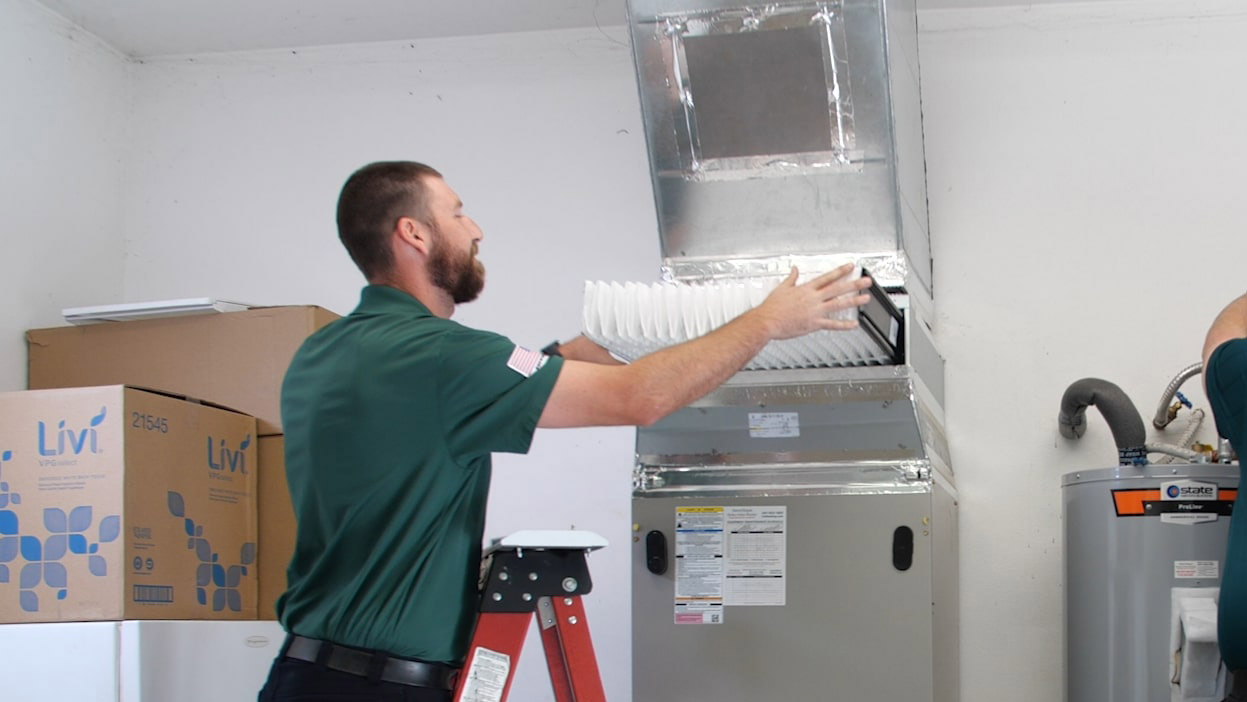
You can troubleshoot by opening vents and grilles. If the filter is dirty, it should be replaced. For internal problems, you’ll need a professional inspection. Then, we can recommend the best AC, heat pump, and furnace repairs for your needs.

Simple Checks Before Calling a Technician

Before you call for an inspection, there are a few air handler control board troubleshooting steps you can handle on your own if you’re up to it.

  • Check Filters: See if your filter is dirty. If it’s been more than 60 to 90 days since the filter was replaced, change the filter.
  • Confirm Vents Are Open: Verify that all of your supply and return vents are open and unobstructed by furniture.
  • Verify the Thermostat Settings: Look at your thermostat settings to see if the thermostat is set to the right mode and temperature. If your display is unresponsive or dim, you may need to replace the batteries.

These tips can help with basic problems. If they don’t work, you’ll need to call a technician for help diagnosing and repairing internal components. That’s where we come in.

Fixes That Usually Require a Professional

How do you know when it’s time to call a professional? From capacitor replacements to new AC installations, there are a few problems that require professional help.

  • Capacitor Replacements: This is one of the most common reasons why a blower motor won’t start. Because of the dangerous levels of electricity involved, capacitors should only be replaced by an expert.
  • Blower Motor Replacement: In coastal homes, corrosion increases the likelihood of blower motor issues. Our team can replace a seized or failing blower motor.
  • Control Board Diagnosis and Replacement: Our team can test your board circuits to find and replace faulty components. No guesswork, just fixes.
  • Duct Inspection and Sealing: To solve airflow issues, we inspect and seal leaks in your ductwork, wherever they might be.
  • System Sizing Review: An improperly sized system will struggle to create and deliver conditioned air throughout your home. After determining the appropriate load capacity, we can recommend the right heat pump or air conditioning system installation for your home.

Frequently Asked Questions About Air Handler Problems

Why is my air handler fan running, but no conditioned air is coming out?

If the fan appears to be running normally but your home isn’t the appropriate temperature, it could be a number of things. Common causes include refrigerant issues, frozen coils, outdoor unit problems, or compressor malfunctions. Because of the risks involved, it’s important to schedule professional HVAC repairs.

How do I know if my air handler control board is bad?

HVAC control problems can lead to error codes on the digital thermostat display and problems with the system not turning on when the thermostat calls for it to do so. One of our technicians can troubleshoot this problem by testing the voltage at the board terminals. Once the control board failure is confirmed, we can recommend the best replacement option.

Why is airflow weak in some rooms but strong in others?

If your home has uneven airflow or no airflow from vents, it can be due to duct leaks, dampers that have shifted, or a malfunctioning blower motor. The best way to troubleshoot this problem is by getting a full duct inspection and identifying where air is leaking from the duct system.

How long do air handlers last?

In inland areas, a well-maintained air handler will last 15 to 20 years. However, coastal Oregon’s humidity, salt air, and corrosion rates shorten this average lifespan. To extend your air handler’s longevity, we recommend scheduling annual maintenance to protect your system and catch failing components before they lead to a total HVAC failure.

Schedule an Air Handler Inspection With Alpha Heating & Air

If you’re having airflow problems, fan issues, and control board malfunctions, our experienced HVAC technicians can diagnose and repair the problem. With our speedy services and upfront pricing, you can get immediate help with your air handler control board troubleshooting.

Schedule your air handler inspection today with Alpha Heating & Air. Call us at 541-216-4539.
Why Is My Ductwork Sweating or Dripping Water? Causes and Fixes

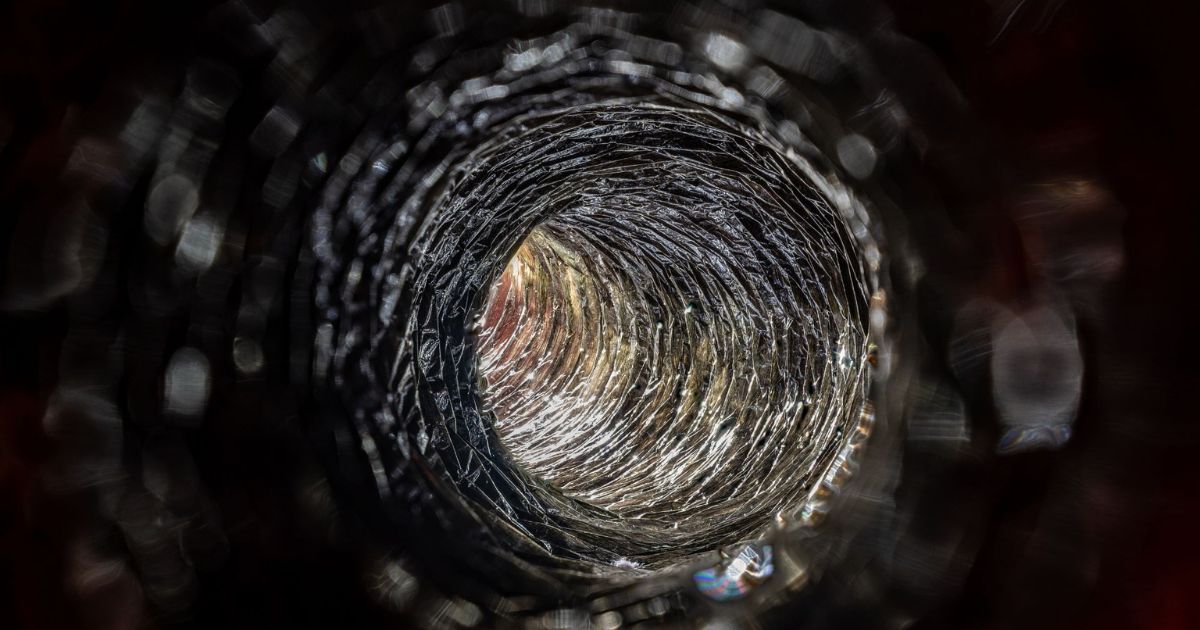
In coastal Oregon, we often have humid air as the marine layer moves in. Because it happens every year, your ductwork is under stress each time. For many of our customers, this is when their ductwork and vents sweat, creating problems.

Additionally, factors like poor duct insulation, uninsulated crawlspaces, and oversized ACs can increase the likelihood of this symptom. Is condensation a problem, and why does ductwork sweat? Let’s take a look at why exactly this happens.

What Causes Ductwork To Sweat?

While poor duct insulation, poorly insulated crawlspaces, and oversized ACs are the causes of ductwork sweating, the science behind it is called the ‘dew point.’

Dew Point in Plain Language

Put simply, the dew point is the temperature the air must cool to before it is completely saturated. Once it reaches this point, water starts to condense. It’s the same process that happens when droplets of water start to develop on the outside of a cold glass. Because your duct or vent is colder than the surrounding air, it gets to the dew point much quicker than it would in regular weather conditions.

Most Common Causes in Coastal Oregon Homes

If you’ve ever wondered, “Why is my ductwork dripping water?”, here are a few potential reasons why that’s happening.

Uninsulated or Under-Insulated Crawlspace Ducts

Even if crawlspace ducts were originally correctly insulated, salt air corrosion can break down the insulation. When the humid, hot air meets the cold ducts, the result is extra sweating. This is common in older Bandon homes, especially the ones that have crawlspaces without air-conditioning. Our team can fix this problem by re-wrapping ducts and repairing the vapor barrier.

Damaged Duct Insulation

Over time, duct insulation can become damaged by moisture, pests, or normal wear. This is especially a problem for homes along the Oregon Coast because of the salt air that constantly drifts inward throughout the seasons.

High Indoor Humidity

When your indoor humidity increases, it doesn’t take as much weather interference to reach the dew-point threshold. Cooking, showering, and doing laundry can easily increase the humidity levels in your home. Choosing to install a dehumidifier or exhaust fans is one of the best ways to reduce indoor humidity.

An Oversized AC That Short-Cycles

Oversized ACs reach the chosen temperature too quickly, so they shut off before running long enough to remove sufficient humidity for your comfort. While your home might feel cool, it will be more humid than it should be. To fix this, homeowners need a load calculation performed when they get an AC replacement.

Simple Checks Before Calling a Technician

Before you reach out for professional diagnostics, there are a few things you can do to troubleshoot your ductwork and AC vents that are sweating.

  • Use Your Exhaust Fans: Whenever you shower or cook, run your exhaust fans during and for 15 minutes afterward. This helps to remove excess humidity and prevent duct sweating.
  • Unblock Your Return Grilles: For proper airflow, the return grilles should never be blocked by furniture or rugs.
  • Change the Thermostat: On heavy marine-layer days, duct sweating is more likely to happen. During these days, try raising your thermostat a few degrees, so the temperature difference between the ducts and the surrounding air is smaller.

If you are unable to solve the problem with these tips, you likely have a structural issue that needs to be fixed by a heating, ventilation, and air conditioning (HVAC) technician.

Fixes That Usually Require a Professional

While some problems can be addressed on your own, more complex cooling repairs and replacements must be handled by a professional. It’s the only way to ensure that the problem gets fixed quickly and on the first try.

  • Duct Inspection and Insulation Repair: During our duct inspection, we’ll look for air leaks, vapor barrier issues, and signs that the insulation has failed. Then, we can recommend the best course of action.
  • Indoor Air Quality (IAQ) Assessment: With this assessment, we can evaluate your home’s IAQ to determine if a dehumidifier, air purifier, or ventilation upgrade is necessary.
  • Correct System Sizing: When an air conditioner keeps short-cycling, it’s important to conduct a proper load calculation. This helps us determine the correct system size, so you don’t have to deal with an excessively humid home.
  • Humidifier Adjustment: Sometimes, the real issue is your home’s humidifier. People sometimes leave the whole-home humidifier on its winter settings. If the humidifier is left on during spring and summer, it can add too much moisture to the air. By adjusting or disabling it seasonally, we can prevent this problem.

Frequently Asked Questions About Sweating Ductwork

To get a better understanding of this issue and what you can do about it, check out some of the questions we often hear from Bandon residents.

Is ductwork sweating dangerous?

While it isn’t healthy over the long run, ductwork sweating doesn’t pose an immediate danger. However, this issue still needs to be dealt with because the moisture can cause mold to grow and attract pests. Over time, it can result in wood rot, drywall damage, and damaged insulation.

Why are my AC vents dripping water in summer?

When the surface temperature of a duct or vent drops below the dew point, water condenses on the cold surface. High indoor humidity, poor duct insulation, a lack of crawlspace insulation, and oversized ACs can all increase the likelihood of this problem occurring.

Can a dehumidifier stop ductwork from sweating?

A dehumidifier helps with ductwork sweating by lowering the humidity level of the air. However, this doesn’t address the root cause, which is often poor duct insulation. To fix the problem, you need to have your ducts inspected and insulated properly.

Does an oversized AC cause ductwork condensation?

An oversized AC installation can contribute to ductwork condensation. Because the AC’s capacity is too high for your home’s needs, it reaches the chosen temperature before it has a chance to reduce your indoor humidity enough. As a result, your indoor air is more humid than it should be, so condensation will occur.

Schedule a Ductwork Inspection With Alpha Heating & Air

Why does ductwork sweat? And what can you do about it? At Alpha Heating & Air, we can answer all of your HVAC questions. Our trusted technicians can ensure your duct insulation, crawlspace moisture, and system sizing are set up to minimize indoor moisture.

Discover our same-day services and upfront pricing by reaching out to us at 541-216-4554.

HVAC technician repairing an AC unit in a Bandon home.

Condenser Fan Motor Troubleshooting: Why It’s Not Working and What to Check

If your fan blade isn’t spinning, you may need to do some condenser fan motor troubleshooting. A condenser fan problem may cause your system to shut off intermittently without warning, and even if the outdoor unit manages to run, this type of problem may cause the system to shut off early. Even if your outdoor unit runs, the fan blade might not spin.

While there are basic troubleshooting steps you can take on your own, more complex repairs should be left to the professionals. For professional diagnostics, reach out to Alpha Heating & Air at 541-216-4548. Let’s look at a few things to look out for.

What Does the Condenser Fan Motor Do?

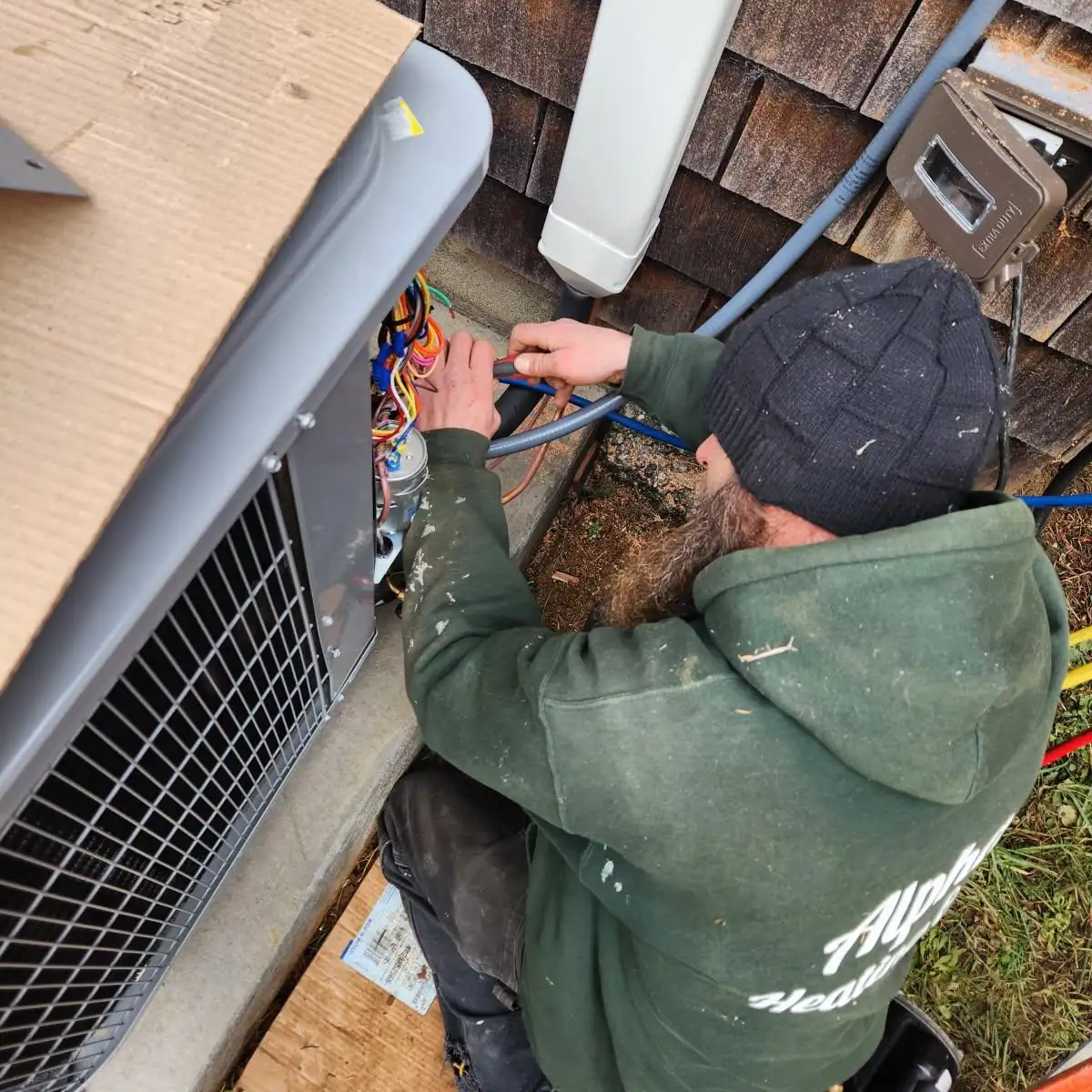
The condenser fan motor is an essential part of your heating, ventilation, and air conditioning (HVAC) system. It is located underneath the metal grille that’s on the top of your outdoor unit.

Why This Component Matters for Cooling Performance

This fan plays an integral role in your heat pump or AC installation. It draws air across the condenser coil, which allows the coil’s refrigerant to release heat. Once this is done, the refrigerant can be sent back into your home to absorb heat again.

If the fan motor stops working, the refrigerant can’t get rid of the heat that builds up from the motor. The pressure in this system will rise until the safety switch shuts the unit down because overheating can seriously damage the components of your HVAC system.

Unfortunately, our coastal environment means the coil already has to work harder to release heat. If the fan motor isn’t working at its best, this extra demand on the system can lead to a rapid decline in performance.

Common Reasons Condenser Fan Motor Stops Working

There are a few common reasons why your condenser fan motor could have failed.

Failed or Weak Capacitor

The capacitor is responsible for sending enough electricity to the motor for it to start. If the capacitor is weak, that’s usually why the AC outdoor unit fan isn’t spinning. At times, it may spin slowly or not even spin at all to begin with. As a general rule, this is the most common condenser fan motor problem we see, and it is relatively affordable to repair.

Burned-Out or Seized Motor

Another common cause is the motor itself. Motors can burn out if they are run hot for an extended period of time. For example, this often occurs if weak capacitors aren’t replaced when they need to be. If the motor has seized, the fan blade won’t even be able to spin freely by hand.

Normally, if the motor is burned out or seized up, you’ll hear a humming noise or notice that fan stops spinning.

Bandon’s salt air and humidity mean that motor windings, contactor contacts, and capacitor terminals are more prone to corrosion. A component that might last 10 years inland will often fail in a few years along the coast, especially if it isn’t properly maintained. To fix a burned-out motor, you’ll need a motor replacement from a professional heating, ventilation, and air conditioning (HVAC) technician.

Contactor or Wiring Problems

When the thermostat signals your AC to turn on, the contactor is the switch responsible for sending power to the fan motor. In our coastal environment, wiring corrosion at outdoor terminals and pitted contactors are common issues. If the contactor is stuck or pitted, you’ll notice that the compressor keeps running, but the fan won’t have any power. Our licensed technicians will inspect your contactor and wiring during our diagnostics to troubleshoot the problem.

Overheating and Thermal Shutoff

Condenser fan motors are often designed with a thermal overload that can automatically cut the motor’s power if it overheats. If your fan is running briefly before stopping, it may be due to the thermal shutoff. This indicates that there is an airflow or motor problem that is causing the unit to overheat.

You can troubleshoot by clearing away any debris or overgrowth that is around your outdoor unit. Additionally, you may need to remove any fencing that restricts airflow.

Simple Checks Before Calling a Technician

Before you call for repairs, there are a few condenser fan motor troubleshooting steps you can handle on your own.

  • Check the Outdoor Unit’s Power: Look at the disconnect box next to your outdoor unit and the breaker panel to confirm that the unit has power.
  • Clear Away Debris: Remove leaves, cottonwood fluff, and grass clippings that are on or around the condenser cabinet.
  • Inspect the Fan Blade: Turn the unit off. Then, see if the fan blade spins freely by hand. If it doesn’t, it likely has a seized motor.

If basic troubleshooting doesn’t help, you’ll need a technician to safely diagnose and repair an internal component.

Fixes That Usually Require a Professional

Whether your motor has stopped or you have an AC fan running slowly in southern Oregon, there are specific situations where professional support is required.

  • Capacitor Replacement: Capacitors store electrical energy, so this repair should only be handled by a licensed technician.
  • Fan Motor Replacement: If your motor has burned out or seized, you’ll need a technician to replace it.
  • Contactor Replacement: Pitted and stuck contactors will need to be replaced to prevent compressor damage.
  • Wiring and Terminal Inspections: If you’re experiencing intermittent failure, our technicians can check for signs of salt air corrosion before you experience a full shutdown.
  • Tune-ups and System Checks: We’ll conduct a full tune-up, which reduces the wear and stress on your motor.

Frequently Asked Questions About Condenser Fan Motor Problems

Can I Run My AC If the Condenser Fan Is Not Spinning?

No, you should never keep running your AC if your outdoor AC unit fan stops working. This can damage your compressor when it overheats. Rather than risk having a costly compressor replacement, shut off your system at the thermostat and call us for service.

How Do I Know If It Is the Capacitor or the Motor That Failed?

Take a look at the fan. If the capacitor is at fault, you’ll hear a humming noise, and the blade won’t move or will only move with a push. When the motor is faulty, you’ll hear a grinding noise, see burn marks, or notice that the motor is hot to the touch.

Our technicians can test your capacitor’s microfarad rating and motor winding resistance. Depending on the results, we can determine which part needs to be replaced.

Why Does My Condenser Fan Start and Then Stop After a Few Minutes?

When a condenser fan starts and stops every few minutes, it is likely due to the thermal overload. This safety mechanism shuts off your condenser fan to prevent damage. In most cases, this is due to a weak capacitor or restricted airflow. To avoid damage to your motor, shut off your system and call for repairs.

How Long Does a Condenser Fan Motor Last?

A condenser fan motor often lasts around 10 to 15 years in inland climates. Because of the salt air and humidity in coastal Oregon, condenser fans have much shorter lifespans. To catch early signs of wear and extend the lifespan of your system, it’s important to schedule annual AC tune-ups.

Schedule a Condenser Inspection With Alpha Heating & Air

If you’re experiencing problems, our team can diagnose contactor, fan motor, and capacitor issues on our first visit. Through our upfront pricing and same-day services, you can get the fast, affordable results you need to stay comfortable this summer.

Learn more about condenser fan motor troubleshooting by calling Alpha Heating & Air at 541-216-4548.

HVAC technician checking for AC issues to prepare for Bandon summer.

Why Did Some Power Circuits Stop Working? First Things to Check

So, why does my electricity keep tripping? When a room or section of your home has no power, it disrupts your entire life. While a tripped breaker or ground fault circuit interrupter (GFCI) outlet is the likely reason why you’re without electricity, the root cause behind the tripped outlet or breaker can vary.

For professional diagnostics and prompt electrical repairs, reach out to Alpha Heating & Air at 541-216-4539.

Why Do Circuits Stop Working?

Your circuits bring power to different sections of your house. T=because of this, only a single section will lose power if there is a problem.

How Circuit Breakers and GFCI Outlets Protect Your Home

Your breakers and GFCIs are designed to cut off power to protect your home. This safety response prevents fires, electric shocks, and additional damage from happening.

In coastal Oregon, nuisance trips occur relatively frequently because of our area’s humidity. Additionally, older homes in the area often have aging panels and undersized wiring, which increases the likelihood of having a GFCI outlet or a circuit breaker tripped.

First Things To Check

So, why did some power circuits stop working? In general, there are a few common causes that may be responsible.

Your Main Electrical Panel

First, you should check the breaker panel. If a breaker has tripped, it will be in the middle position between on and off. Then, you can reset it by turning it completely off and then back on again.

If the breaker immediately trips again, don’t reset it. This means that there is an underlying electrical issue, so you need to reach out for professional help.

GFCI Outlets in Bathrooms, Kitchens, and Garages

GFCI outlets are designed to protect your home from ground faults, electrocution, and fires by detecting if any of the electrical current is leaking out. They’re placed in humid areas, like kitchens, bathrooms, and laundry rooms. If the GFCI outlet trips, it can cut off power to other outlets downstream. This problem is particularly common in older coastal homes due to moisture getting into damaged outlet boxes.

To resolve the problem, reset the button on the outlet. If the outlet will not reset, there may be a wiring fault, a damaged outlet, or another electrical issue.

Overloaded Circuits

When there are multiple high-draw appliances on a single circuit, it can trip the breaker. To fix this problem, you need to unplug any devices. Before you reset the breaker, you should redistribute the electrical load between different circuits.

If your circuit cannot handle normal use and redistributing appliances isn’t an option, you may need to install a dedicated circuit or a panel upgrade.

Your HVAC System’s Dedicated Circuit

If you haven’t found the answer to, “Why does my electricity keep tripping?”, it may be time to consider a dedicated circuit. When a breaker keeps tripping, it’s often a sign that too much current is flowing through the circuit that is protected by the affected breaker. This is the reason why appliances that draw a lot of power, such as AC units, heat pumps, and electric furnaces, normally have their own breaker.

In this situation, you should call one of our heating, ventilation, and air conditioning (HVAC) technicians before you reset your breaker. Our team can evaluate overloaded circuits in southern Oregon. Through our professional inspection, we can determine if your issue is related to a failing capacitor, dirty coil, or refrigerant issue.

When To Reset vs. When To Call a Professional

As a homeowner, it helps to know when you should reset and when to call for help.

  • Reset If: Your breaker is tripped and in the middle position. Only do this once.
  • Reset If: Your GFCI outlet has a visible red button and no indication of damage or burning odors.
  • Call for Help If: Your breaker keeps tripping, you smell burning odors, or your panel feels unusually warm to the touch.

Repeated breaker trips are a symptom of the problem, not the problem itself. When this symptom occurs, it’s an indication that you need a professional diagnosis.

Frequently Asked Questions About Dead Circuits

Over the years, we’ve helped Bandon residents find answers to pressing questions about dead circuits.

Why did only some of my circuits stop working?

Often, you’ll notice that only one or some circuits have stopped working in your house. This is because circuits control specific sets of outlets or fixtures. When only a section of your home loses power, this is because a single breaker or GFCI outlet tripped and needs to be reset. The underlying cause only affected that area, which is why that specific circuit is the only one that tripped.

Can a tripped breaker cause damage?

The breaker is a safety mechanism designed to prevent overheating and electrical fires caused by overcurrent conditions. While a tripped breaker doesn’t damage your electrical system, the underlying reason why the breaker tripped may be dangerous. If you have an overload, short circuit, or faulty appliance, you’ll want to address those problems before additional damage is done.

Why does my breaker keep tripping?

When a breaker trips frequently, it means you likely have an overloaded circuit, wiring malfunction, or faulty appliance. If it’s an HVAC breaker, we can inspect your heating and cooling installation to determine the cause. Do not continue to reset the breaker until you find out what the cause is.

Is a dead circuit an emergency?

It depends. If your breaker won’t stay on, you notice a burning odor, or the panel feels warm, you should call for emergency help. For a simple tripped breaker or dead outlet, you can wait and schedule a repair appointment.

Schedule a Service Call With Alpha Heating & Air

So, why does my electricity keep tripping? Depending on your electrical system, appliances, and other factors, several issues could be responsible.

Often, an AC unit, heat pump, or electric furnace will run on dedicated breakers. When a system is aging or running inefficiently, it can cause the breaker to trip repeatedly. Tripped breakers can be an early sign of equipment or electrical system problems. Aging panels and damaged electrical wiring can cause the same symptom.

For same-day services and upfront pricing, reach out to Alpha Heating & Air at 541-216-4539 to schedule your professional diagnostics.